
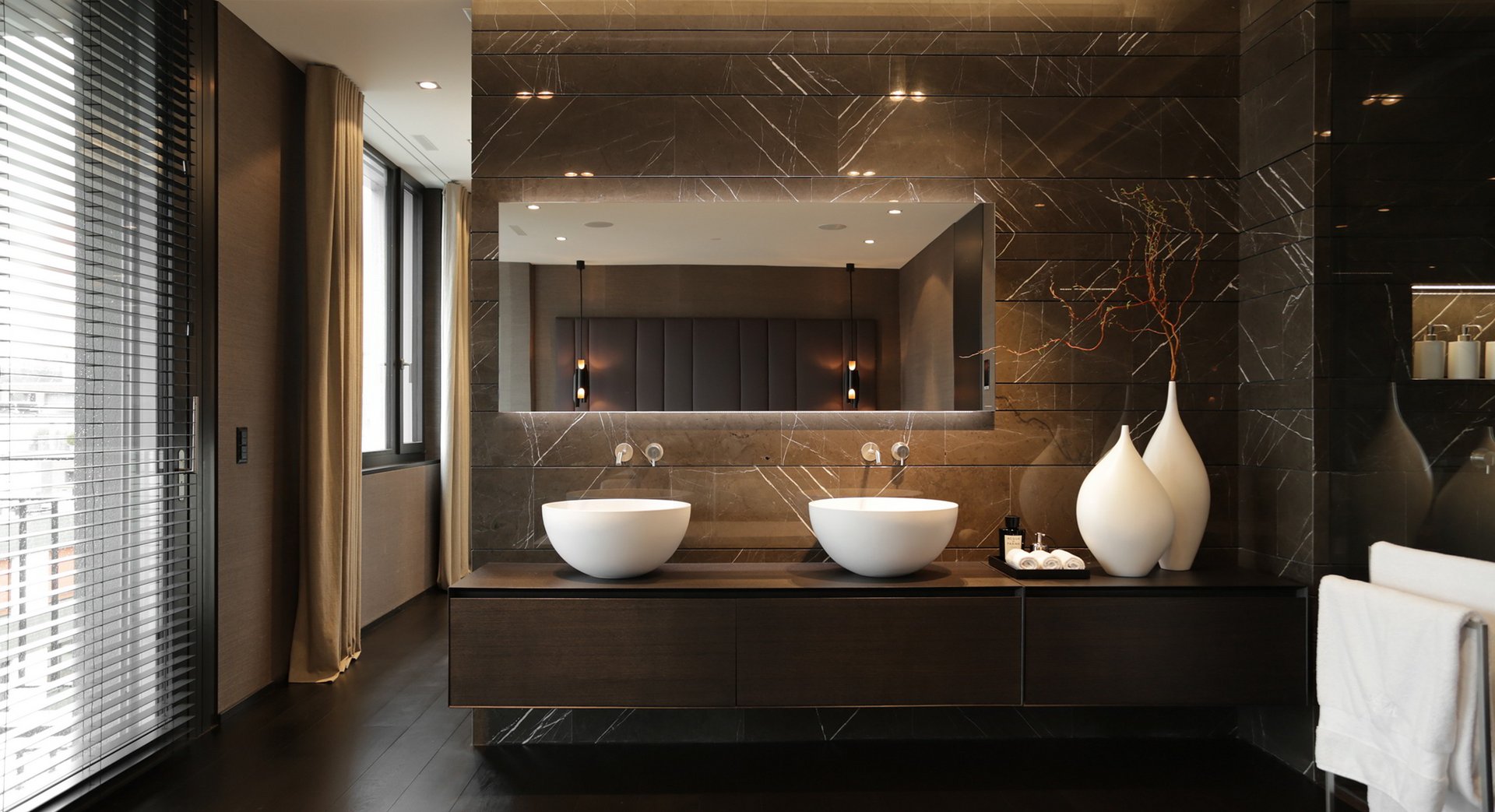
Modern interior design is increasingly shaped not by addition, but by exclusion. Refusal of the superfluous — of decor, excessive forms, familiar scenarios — becomes the basis of architectural thinking. The Italian brand Antonio Lupi, especially in the collections of designer Carlo Colombo, demonstrates this logic with utmost clarity: architecture begins where the designer dares to say “no.” In Antonovych Design projects, this approach is transformed into a method — strict, conscious, and measurable.
Refusal as a new professional norm
According to the World Architecture Festival Insight Report 2025, over 62% of leading architectural firms in Europe and the USA name “reduction” as a key principle in designing residential spaces. This is not about minimalism as a style, but about refusing unjustified solutions.
Antonio Lupi operates precisely within this paradigm:
— no object serves a decorative function;
— every element is justified structurally or scenaristically;
— form is secondary to spatial logic.
For a professional designer, this means a shift in perspective: the interior ceases to be a composition and becomes a system.
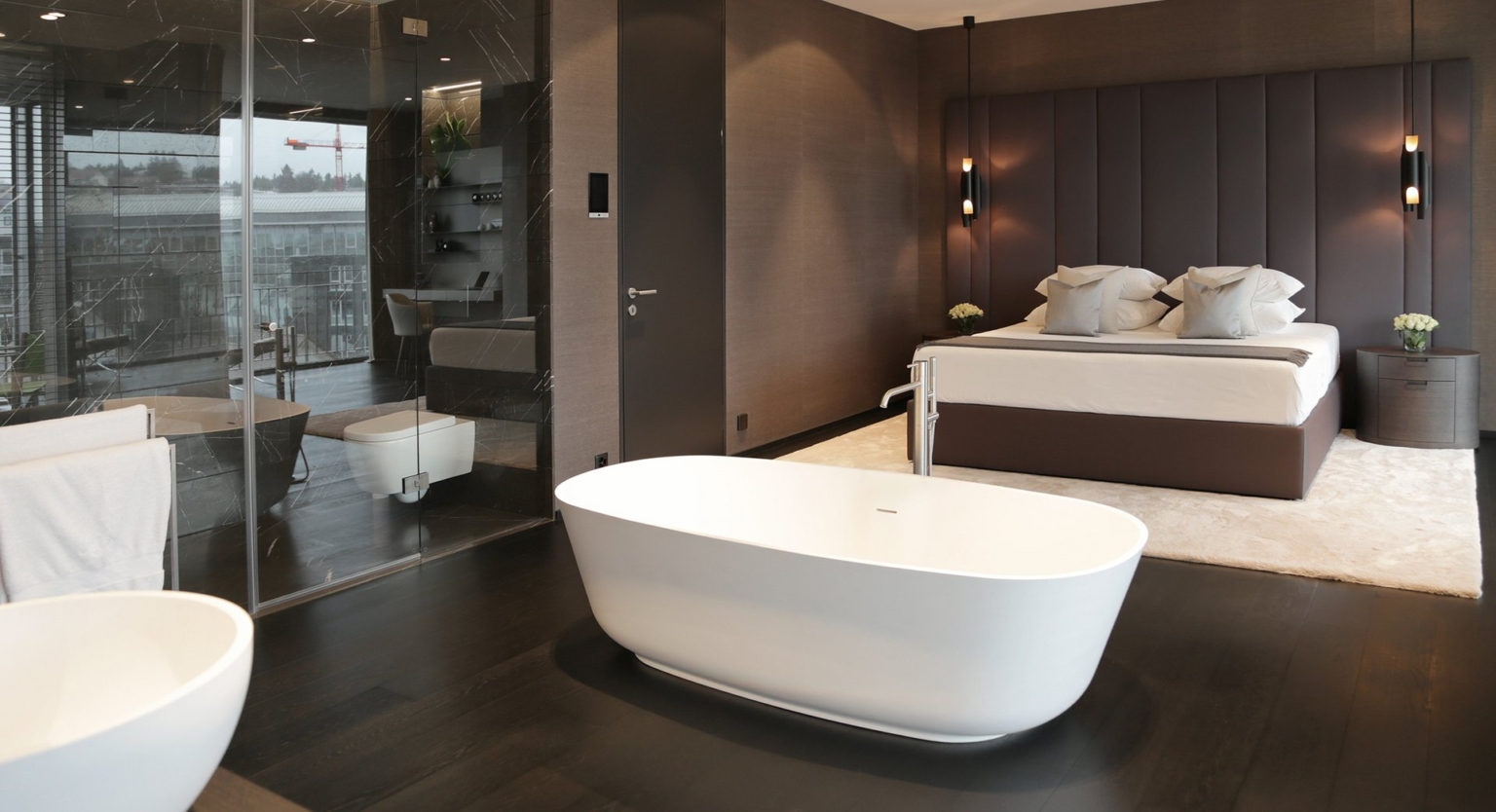
Antonio Lupi: an industry built on exceptions
A fact rarely mentioned in public materials: on average, Antonio Lupi rejects up to 40% prototypes during the development phase. This is confirmed by data published in the ADI Design Index reports.
The reason is a fundamental refusal of:
— visual noise;
— excessive thickness;
— universal “one-size-fits-all” dimensions.
This is why the brand’s collections are rarely mass-produced but consistently appear in architectural-level projects — from private residences to museum spaces.
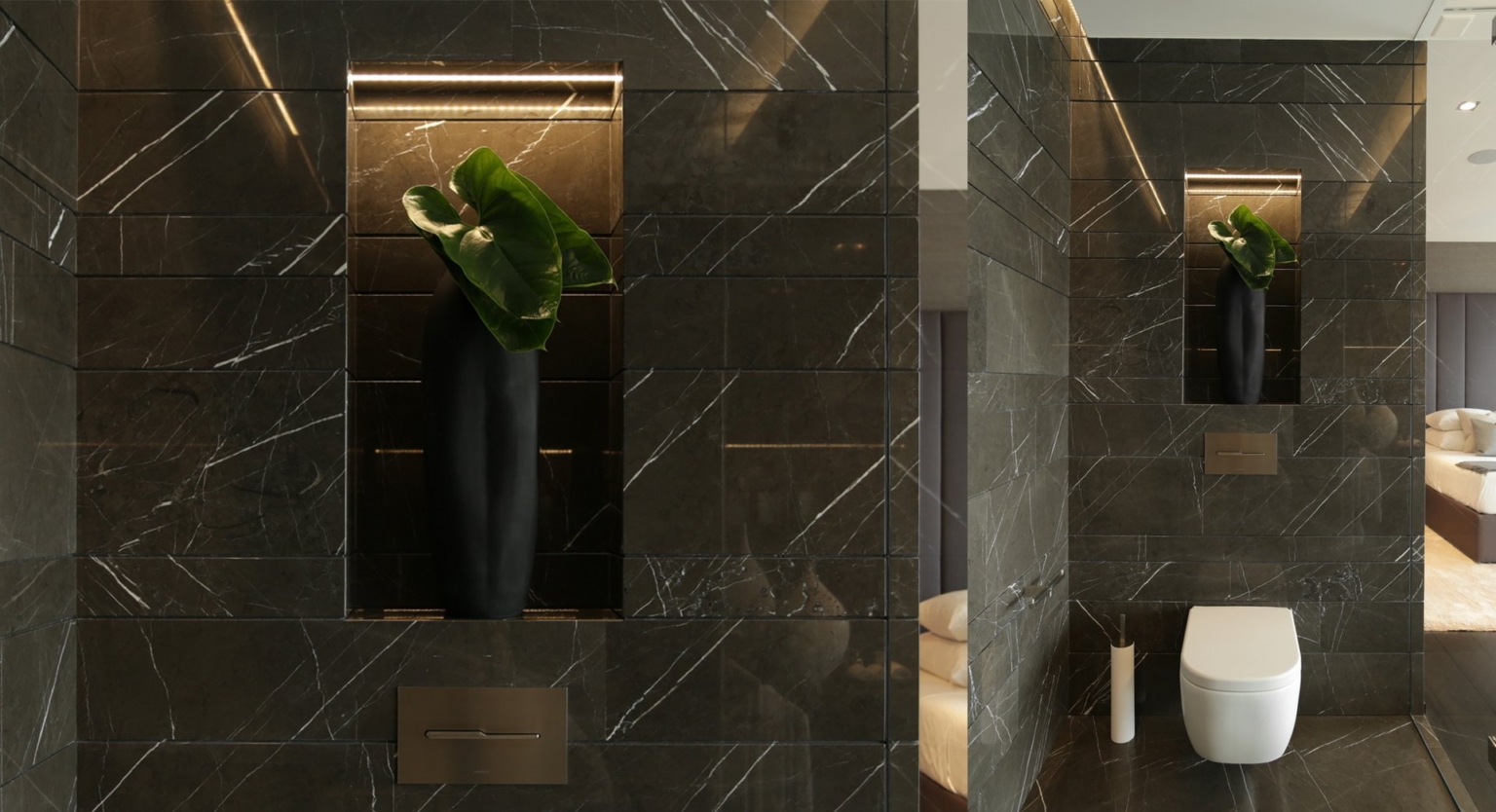
Carlo Colombo: design without compromise
Colombo designs not objects, but the voids between them. His approach is architectural in essence: remove everything that prevents the space from breathing.
A study by Politecnico di Milano (2025) showed that in interiors with monolithic sanitary objects without visual segmentation:
— the level of cognitive load decreases by 31%;
— the space is perceived as 2.1 times more “expensive” (on users’ subjective scale).
This explains why Colombo’s projects look restrained but never cheap.
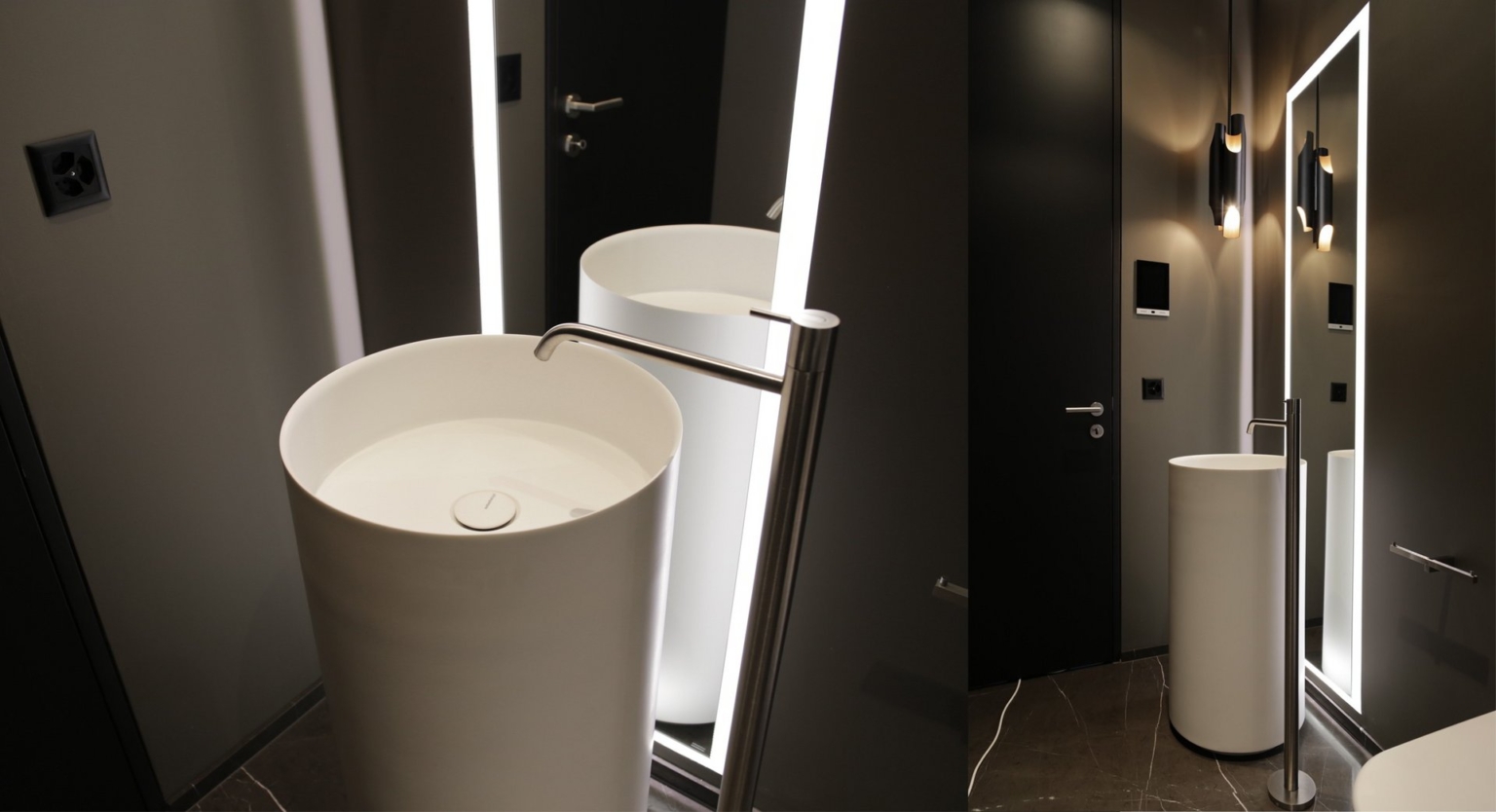
Material as an argument, not an effect
Refusal of decor is impossible without new generation materials. Antonio Lupi invests in research up to 8% of its annual turnover, which is twice the industry average for sanitary ware (data from the European Bathroom Industry Report).
Brand materials:
— work to reflect and absorb light;
— maintain geometry under prolonged loads;
— allow integration into architectural planes without seams or visual breaks.
For design studios, this means one main thing — control over the result years after operation.
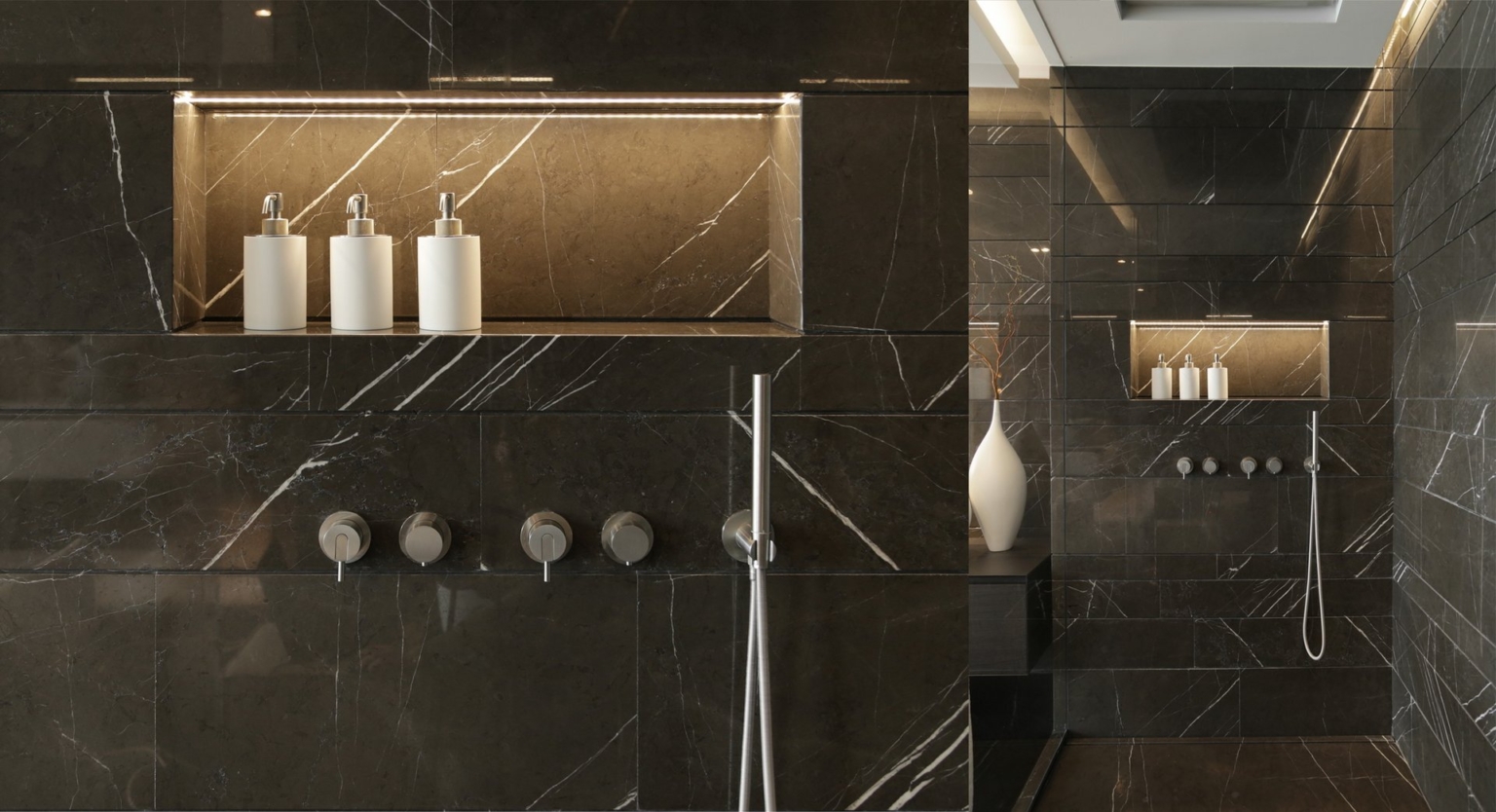
Antonovych Design practice: conscious “no”
At Antonovych Design studio, refusal is part of the project brief.
Svetlana Antonovich, the studio’s creative designer, formulates it very strictly:
“We start a project not with choices, but with exclusions. If an object does not enhance the architecture, it has no right to remain. Antonio Lupi, in this sense, is an honest partner: it does not mask weak solutions.”
According to the studio’s internal analytics, in projects using Antonio Lupi, the number of adjustments during the implementation phase is reduced by an average of 25–30% — due to the precision of forms and predictability of materials.
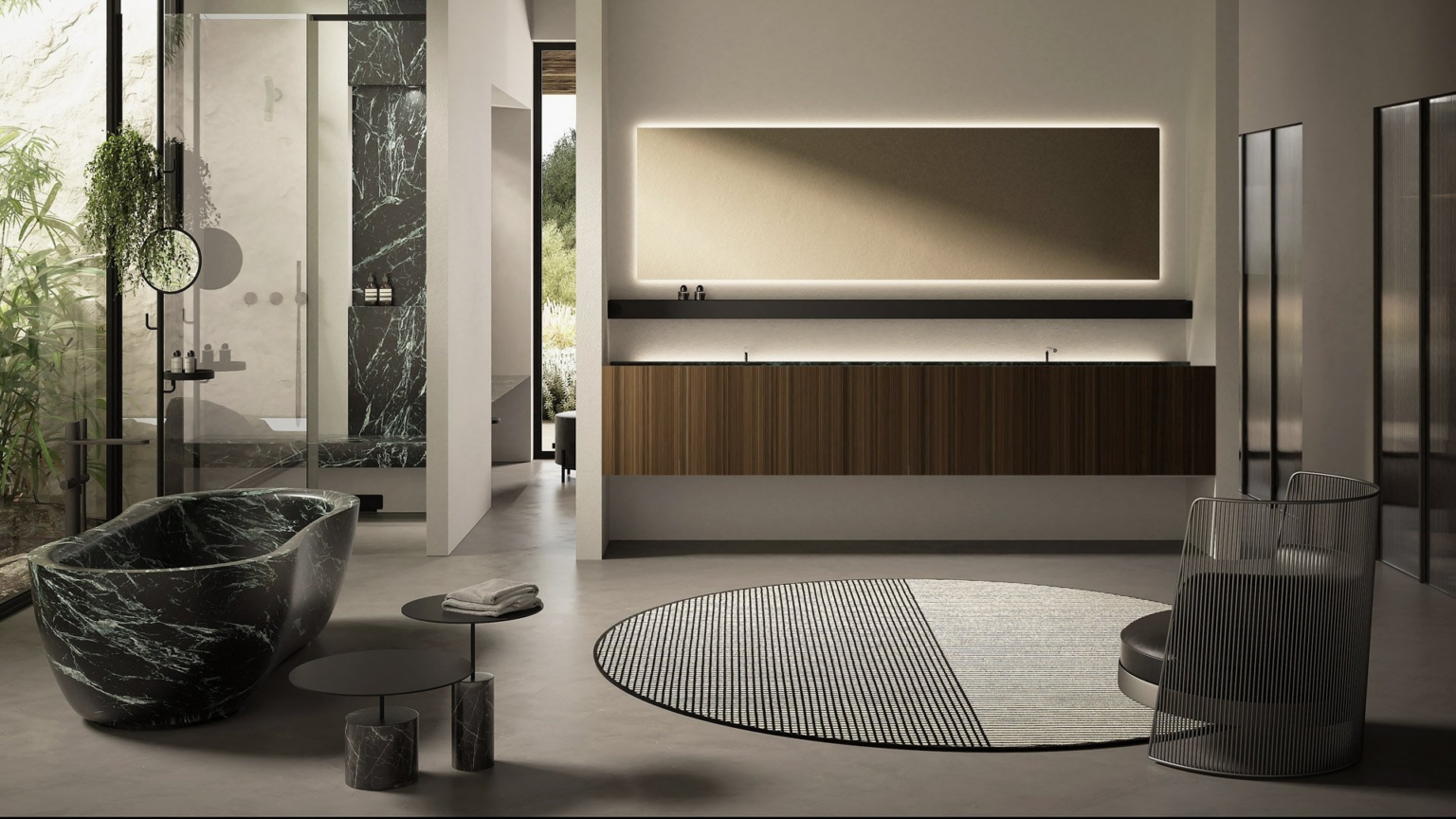
Architecture of the future: less means stronger
According to the forecast of McKinsey Design & Construction Outlook 2025, premium segment clients are increasingly choosing interiors where “fewer objects have a higher semantic load.”
Dmitry Korotchuk, director of Antonovych Home, emphasizes:
“Today, luxury is not about demonstration, but about control. Antonio Lupi allows the architect to forgo explanations. The space speaks for itself.”
It is precisely this refusal — of the superfluous, of excuses, of compromises — that becomes the starting point for the architecture of a new era.