
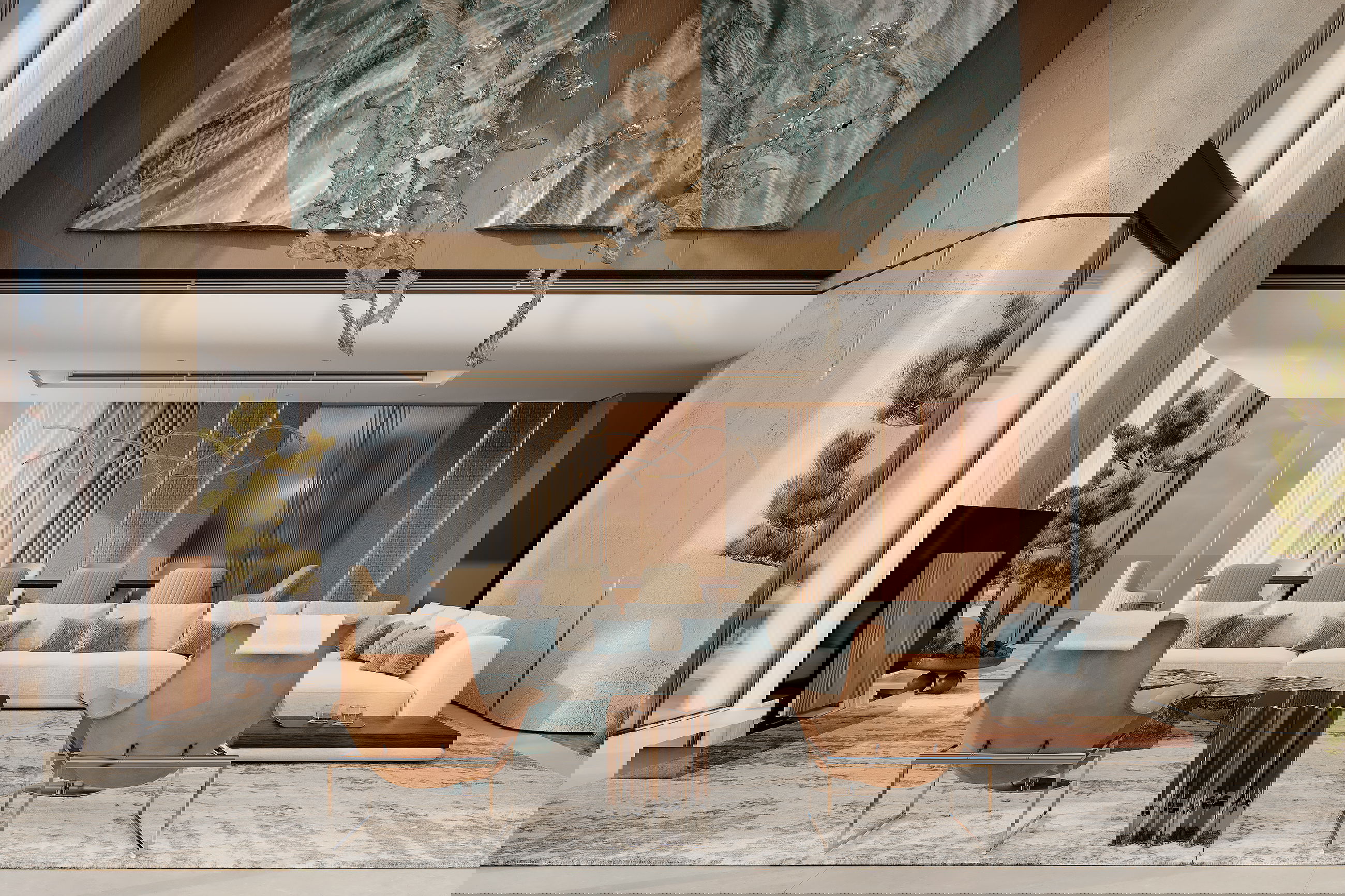
Today, interior design is less and less perceived as a decorative shell of architecture. It gains independence, transforming into a discipline that shapes the rhythm of everyday life. Space begins to operate according to the laws of architectural composition. Antonovych Design projects, led by Svetlana Antonovich, demonstrate that both in Kazakhstan and beyond, a new culture of interior design is emerging – holistic, material, and grand.
Space without partitions
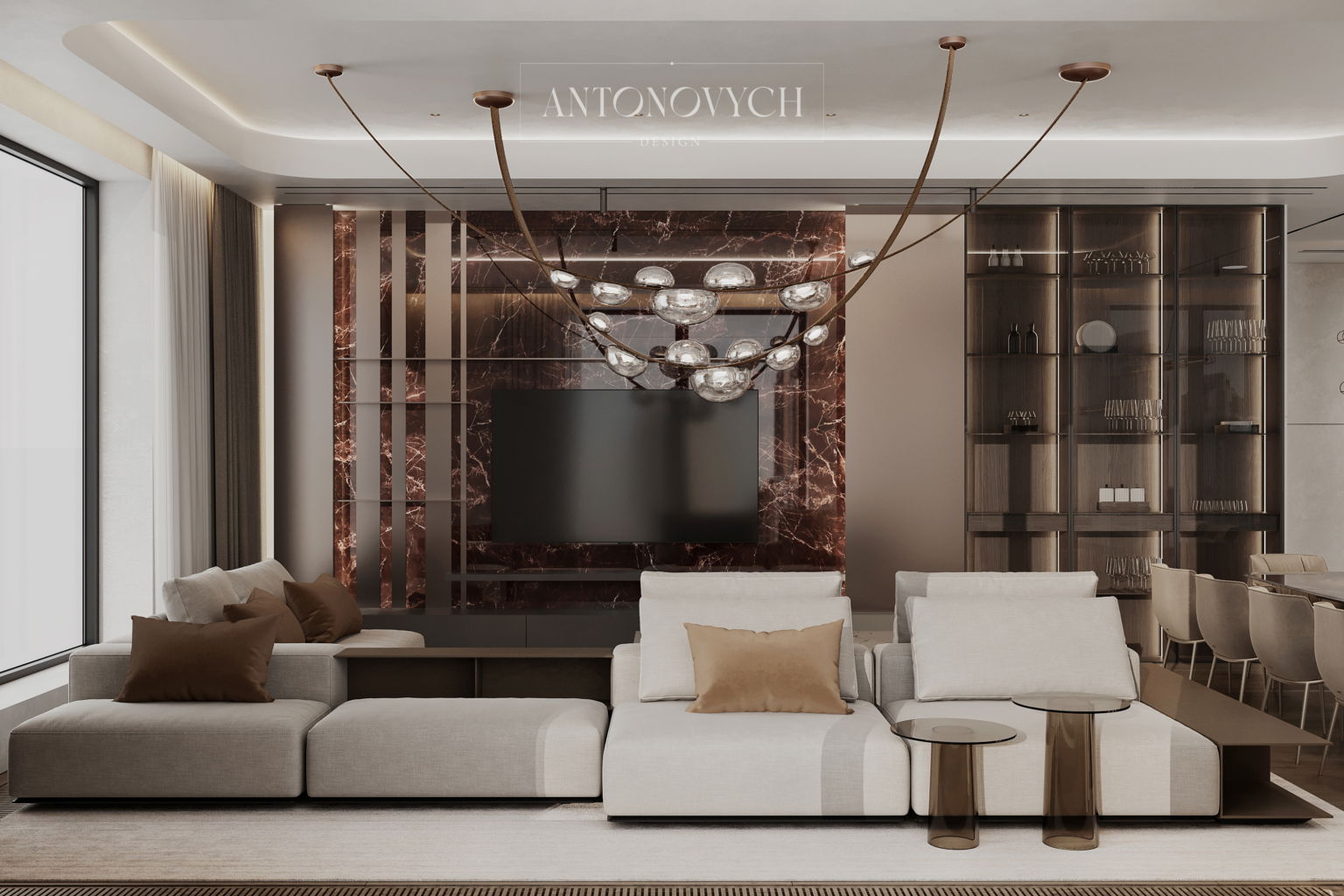
In the project The One (379 m²) the kitchen, dining room, and living room are combined into a single volume. This technique creates a calm background for life, eliminating visual clutter. Zoning is achieved through light and textures, while a marble TV zone acts as an accentuating perspective.
Material as language
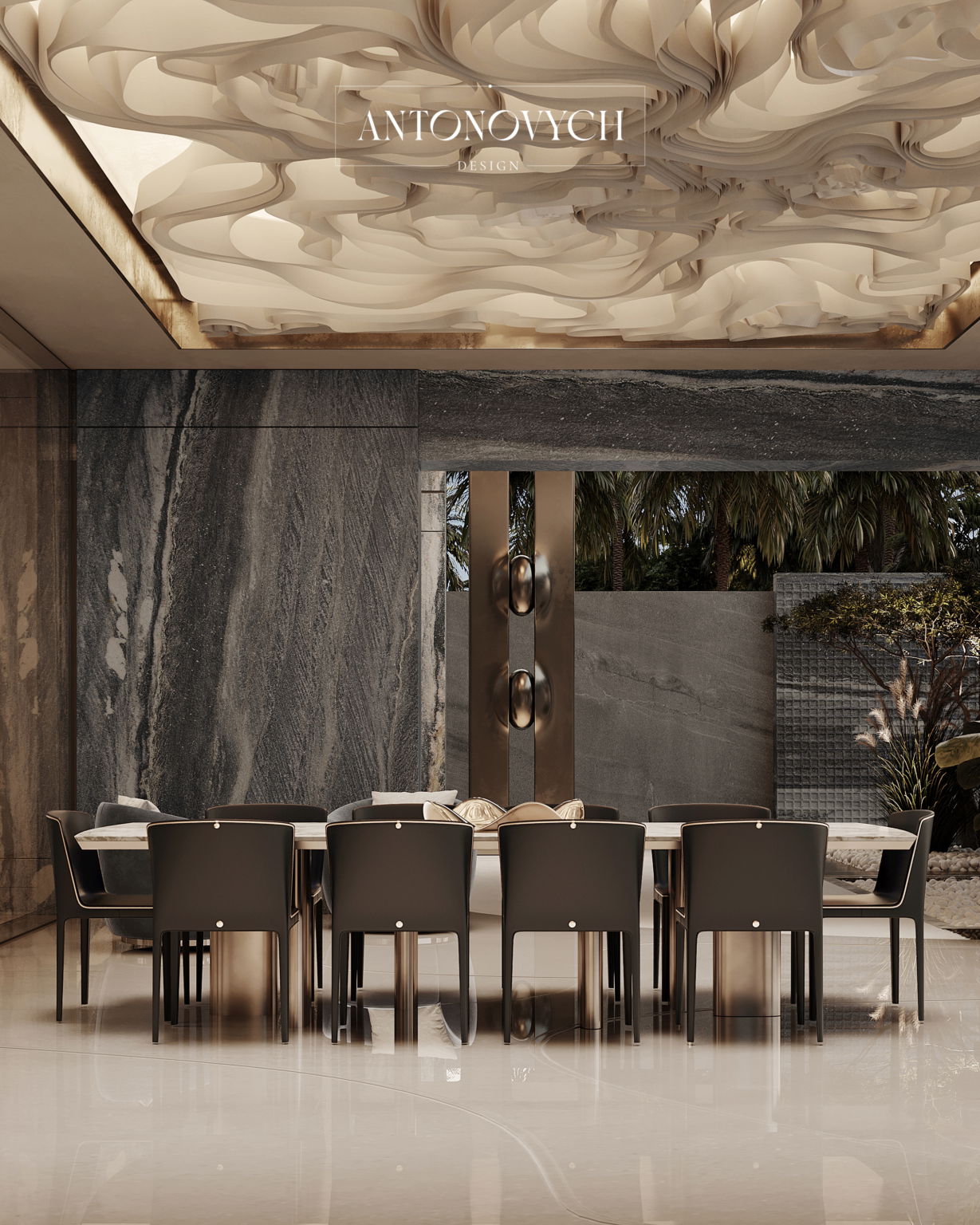
In the project “Architecture born of textures and light” (1300 m²) stone, wood, and light form the basis of the composition. Here, textures replace ornaments, and the richness of the material becomes an architectural tool. For large areas, this is key to creating a cohesive atmosphere.
Light — an element of construction
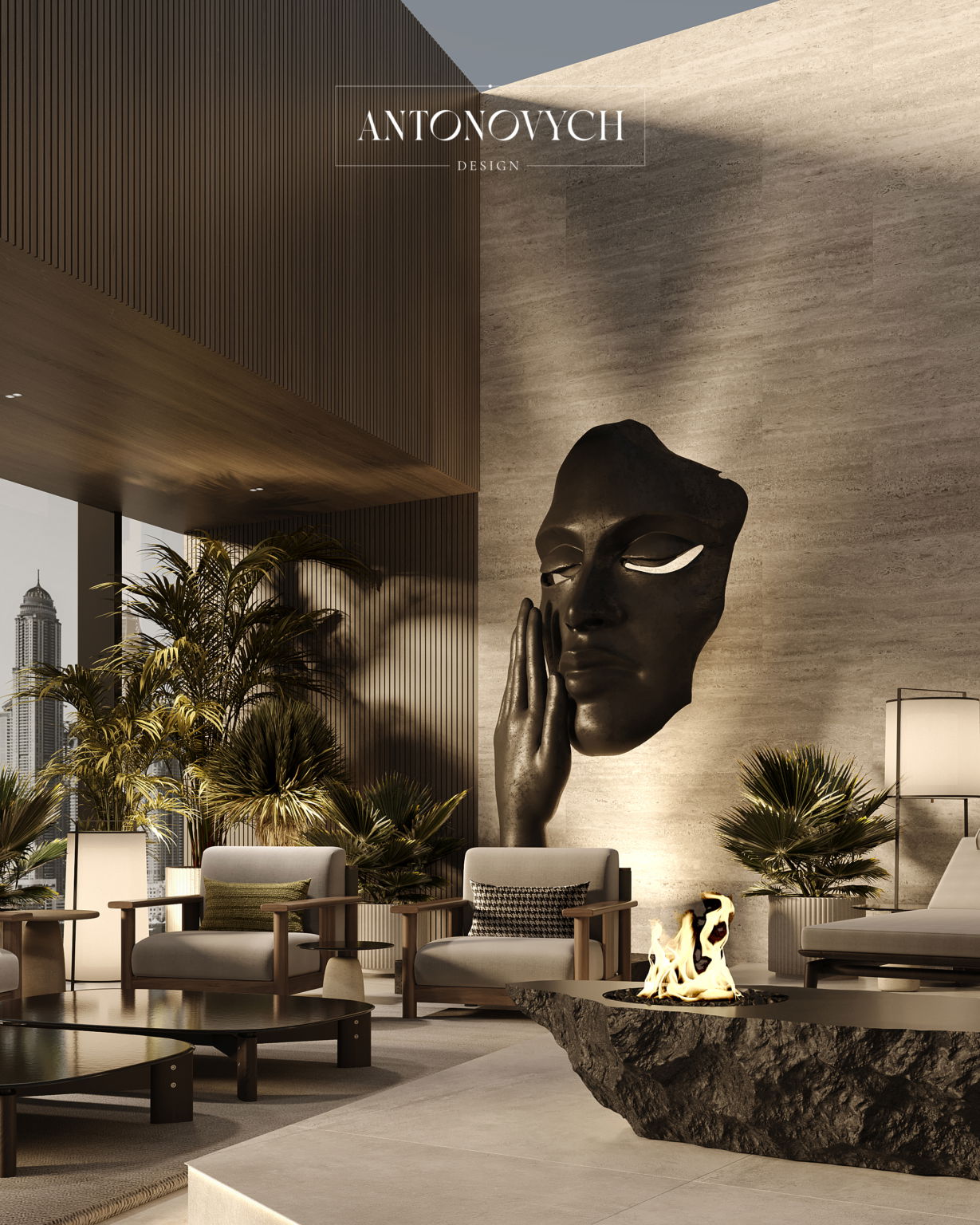
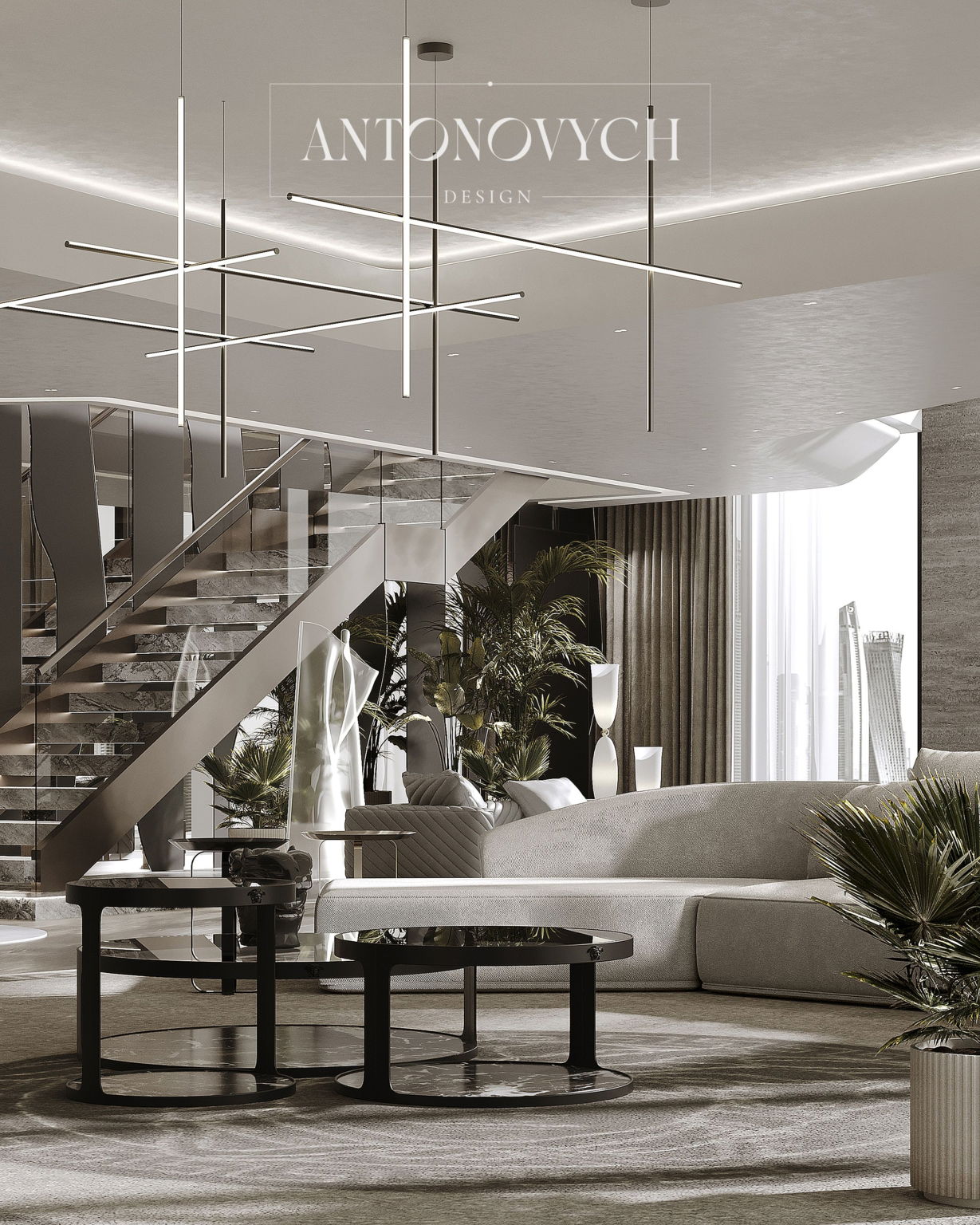
Opus Apartments (430 m²) show how lighting can become part of the planning solution. Different levels of light form routes, correct proportions, and even “raise” ceilings. Backlighting and fixtures here are not decoration, but a structural system.
Asymmetry as a technique
The same Opus apartment works with complex geometry. Instead of masking asymmetry, designers emphasize it with furniture groups and light. Thanks to this, the space acquires an individual character, impossible with standard solutions.
Furniture as an architectural element
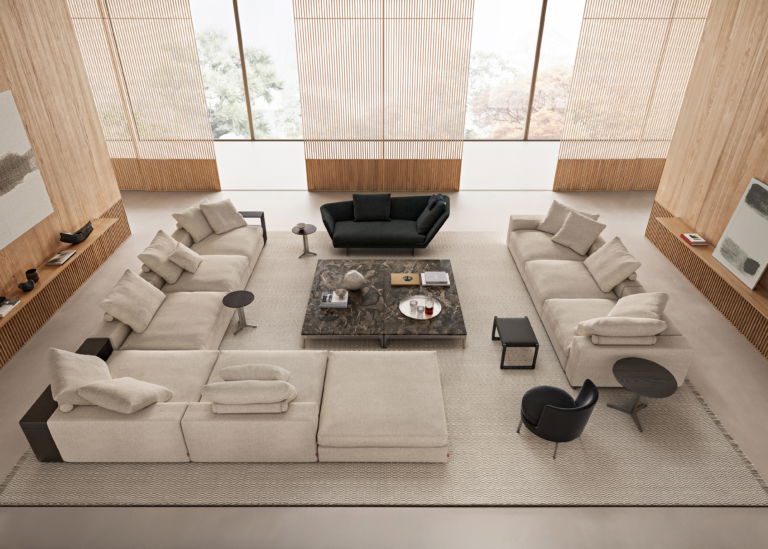
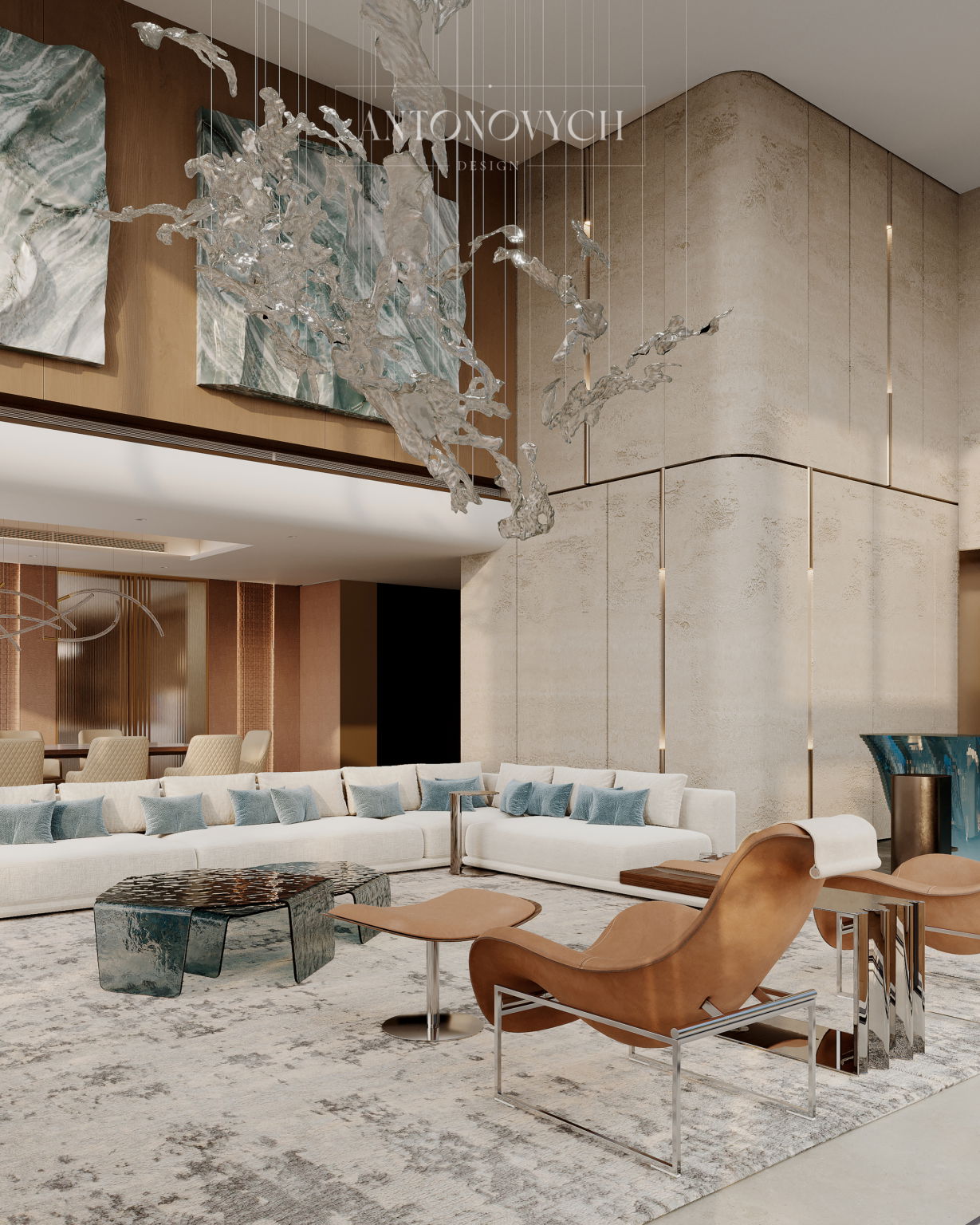
Antonovych Design projects showcase Flexform furniture as part of the architecture. The Groundpiece, Guscio, and Giano collections set the rhythm, define horizontals and scales. The height of the sofa or the thickness of the tabletop is coordinated with the lines of windows and panels — furniture is integrated into the overall system.
Vertical and double light
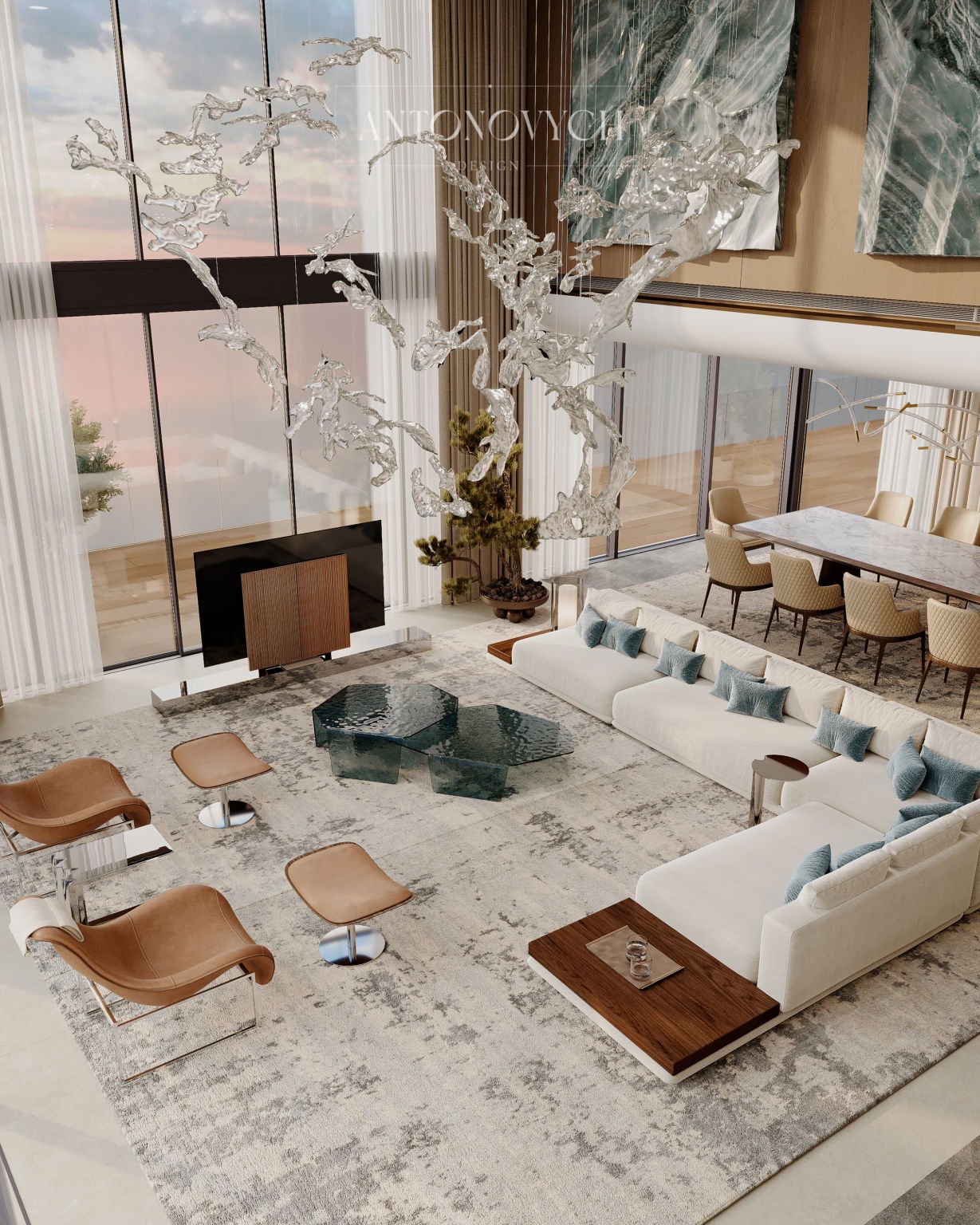
In the Marsa Al Arab villa the double light effect becomes a constructive technique. The staircase, light, and acoustics form a vertical that acts as an axis connecting the levels of the house. The space gains a dominant feature and internal logic.
Privacy without clutter
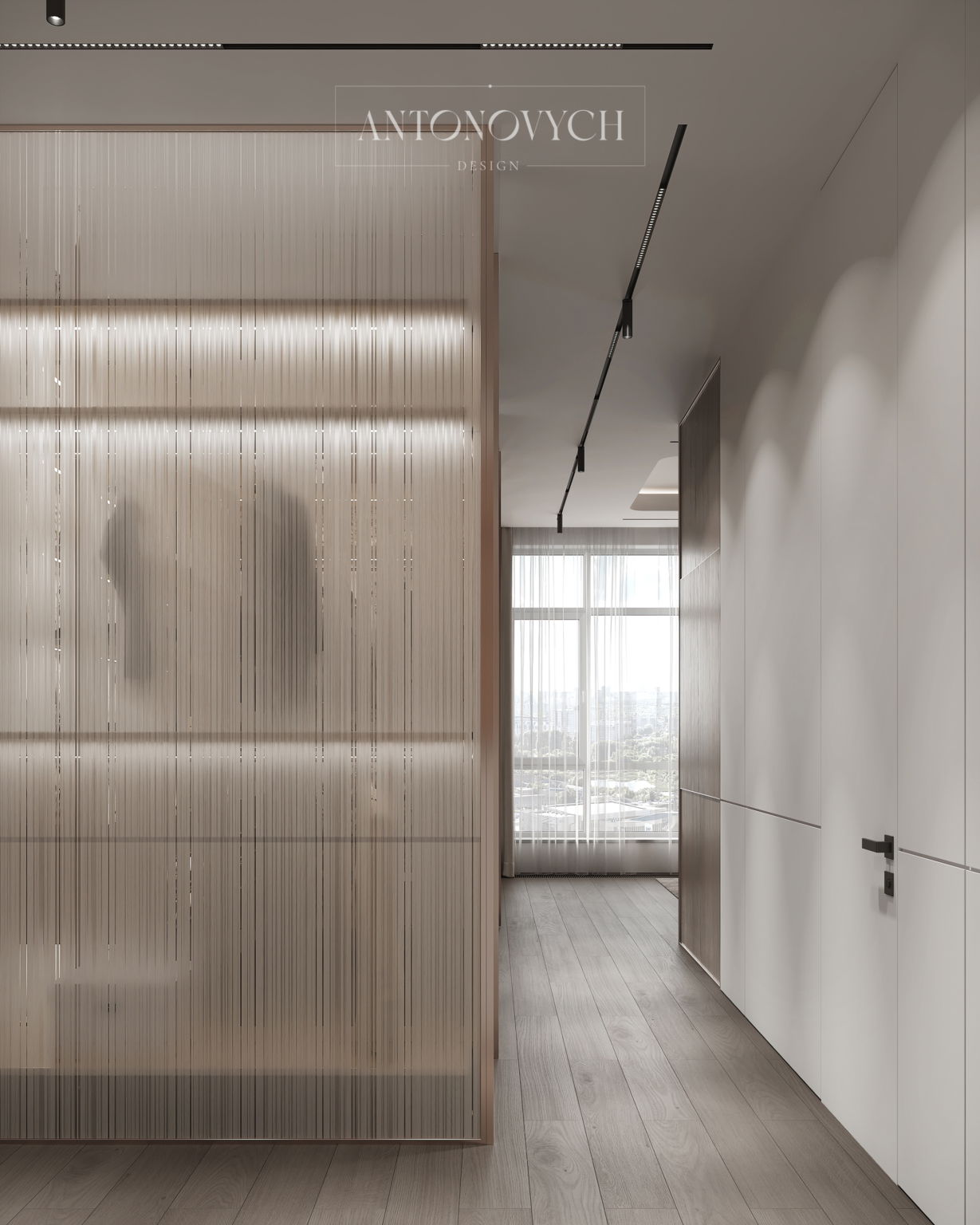
In The One, the private block with a bathroom and dressing room is hidden behind panels. Only a clean composition remains in the bedroom, without visual noise. This approach makes the interior flexible: common areas are open, private ones are dissolved.
Metaphors without direct quotes
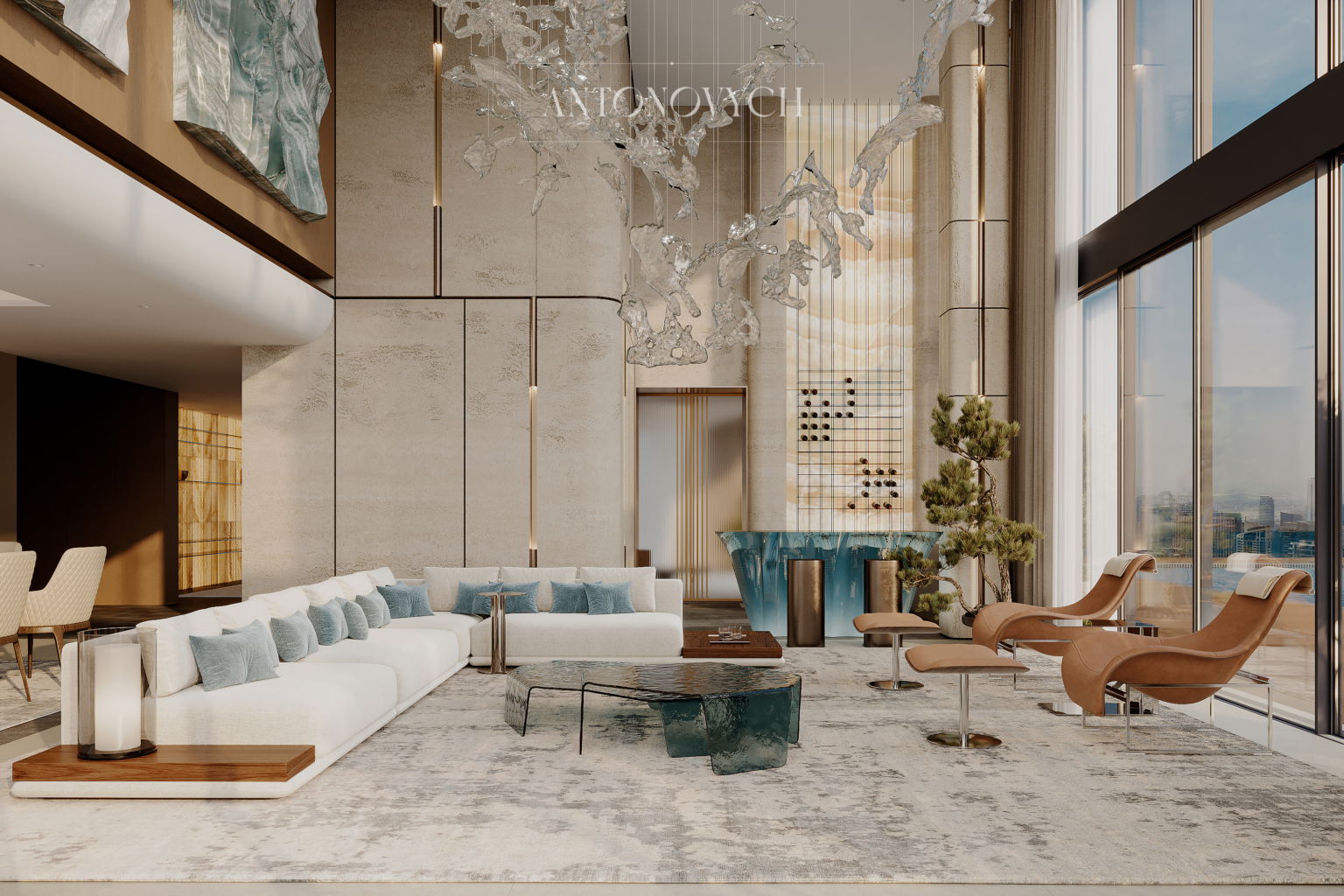
In the villa Marsa Al Arab the marine theme is expressed in the plasticity of forms and texture. Glass resembles the movement of water, green marble evokes associations with depth. This is not a literal quote, but an abstract language.
Individuality within a common code
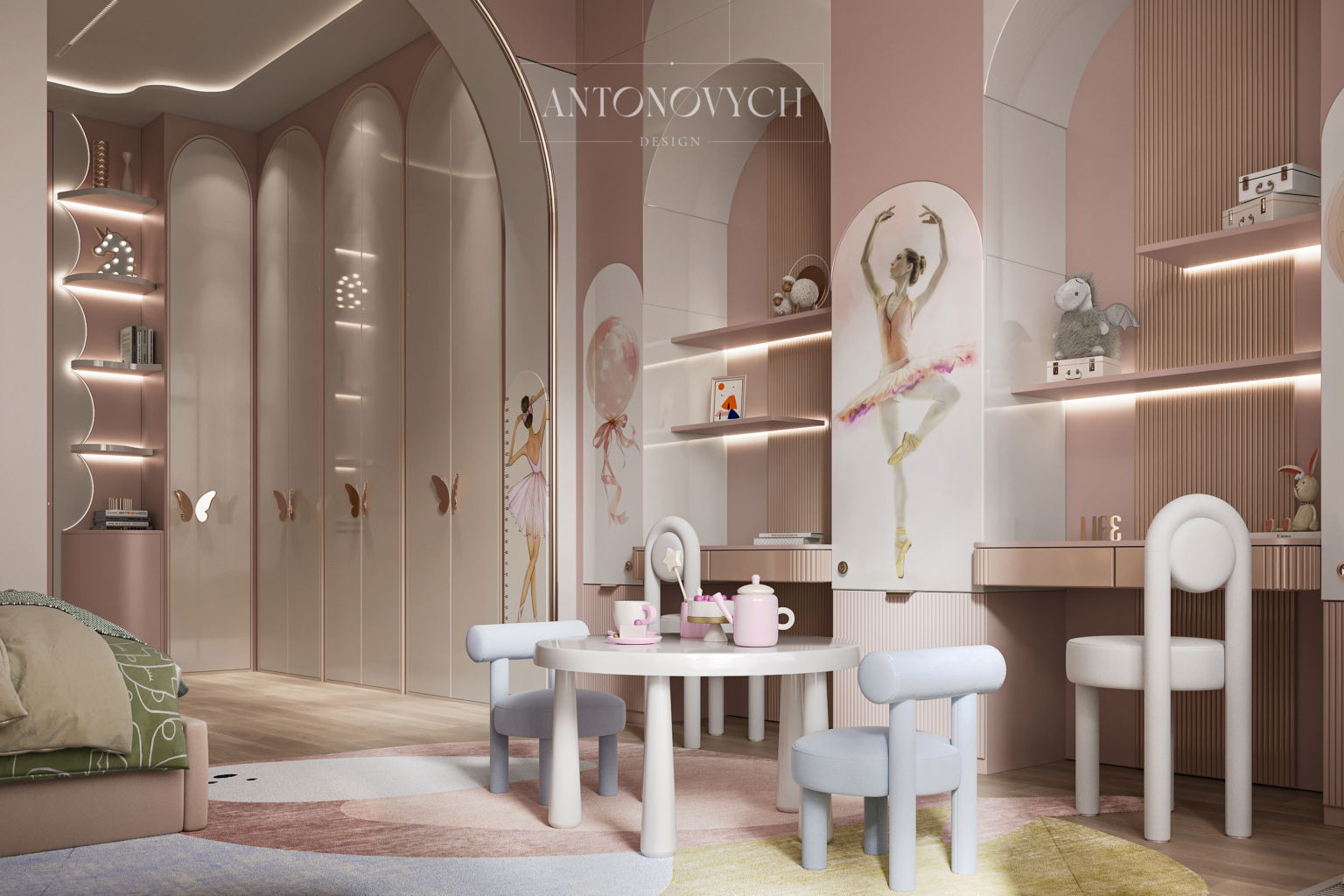
Even the children’s rooms in The One are subject to the overall design line. Pastel shades, soft materials, and arched niches create a cozy space without disturbing the overall integrity. The rooms are designed to transform with the child’s age.
Antonovych Design interiors operate according to the laws of architecture. Svetlana Antonovich builds them as a holistic system: material, light, and furniture are laid out at the design stage. The result is spaces that are grand, structural, and free from randomness.
The main thing here is not style, but method. The interior manages perception, disciplines space, and shapes life scenarios. This approach makes the studio’s projects part of a global professional conversation and allows them to be evaluated on the international stage.