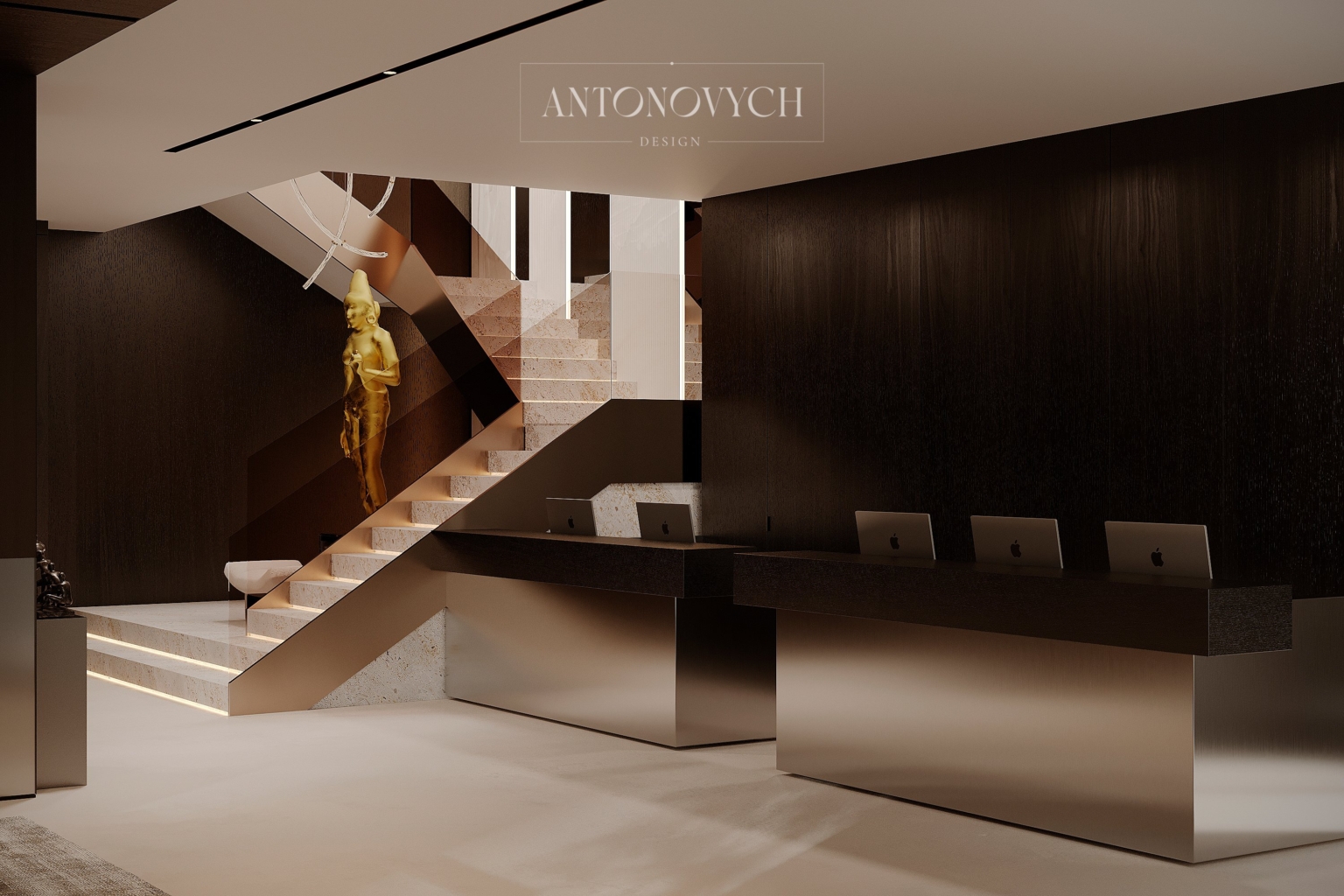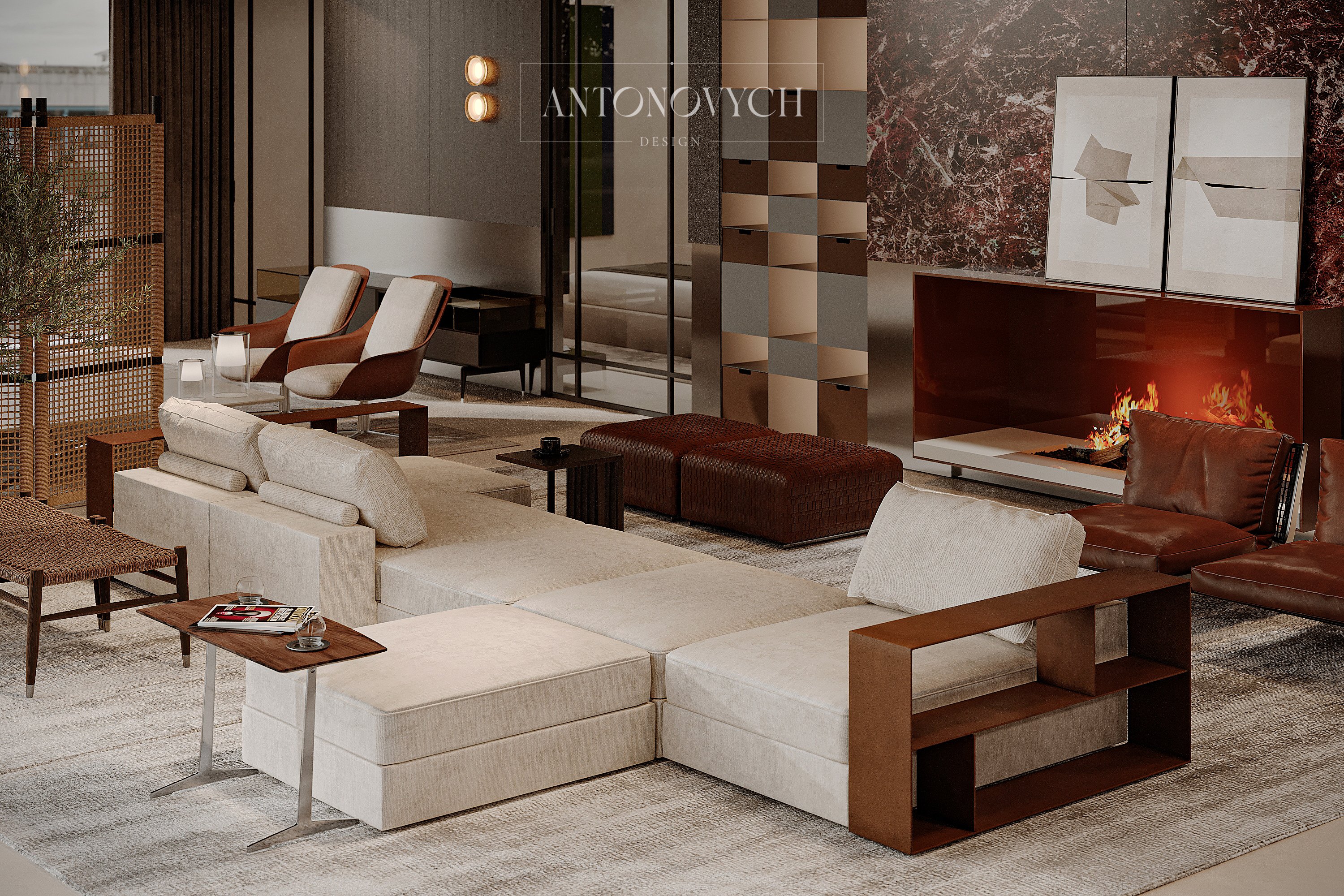
A new multi-brand showroom Antonovych Design has opened in Astana — a space that offers not just furniture selection, but a new approach to forming a modern interior. The project immediately attracted the attention of architects, developers, and business audiences due to its simultaneously strict and well-thought-out concept, built around strong European brands and an understanding of how the culture of living environments is changing in a rapidly developing city.
The Antonovych Design showroom in Astana has become one of those projects that are forming a new infrastructure for the premium interior segment. Its concept is built not around an impressive display, but around the idea of space as a decision-making tool — for designers, architects, and clients working on long-term projects.
An environment created for work, not for display
The three-story space is organized as a sequence of complete interior scenes. Navigation, light, proportions, and tactile materials are brought together into a single logic, thanks to which the interior is perceived not as a collection of disparate objects, but as a system.
This structure allows specialists to test solutions at real scale, compare materials, see how lighting scenarios work, and — most importantly — understand how selected elements function together.
Multi-brand exposition as a market maturity indicator
The exposition is based on factories with a solid reputation — Baxter, Modulnova, Flexform and other representatives of Italian design.
Their presence in one space speaks to two processes occurring in the market:
— Astana’s audience is becoming more demanding of quality and durability;
— developers are focusing on solutions that meet international standards for the premium segment.
As a result, the showroom serves as a benchmark for those working with architecture and design on complex, long-term projects.
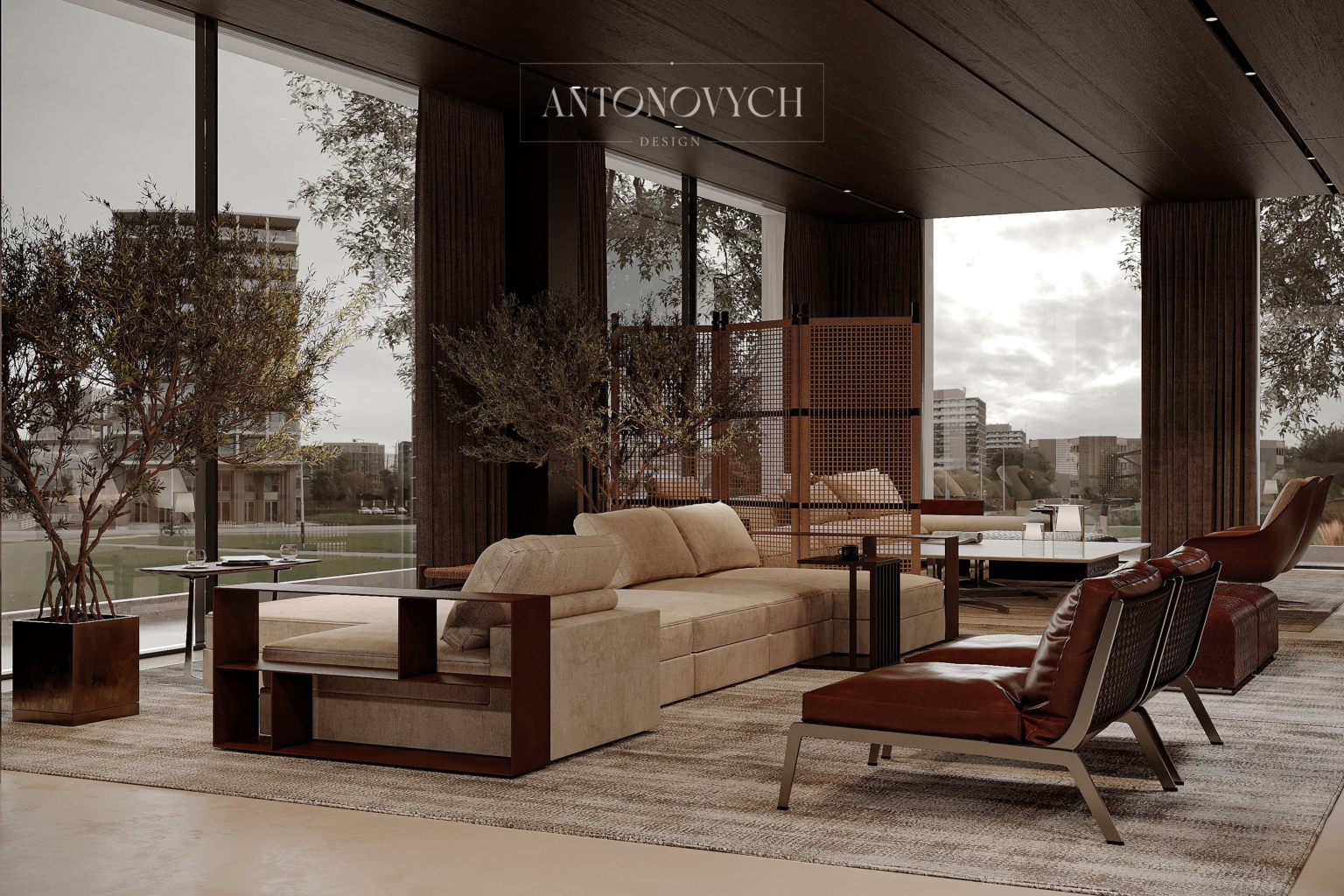
Neutral territory for professional dialogue
Market growth and project complexity require a platform where architects, developers, investors, and clients can discuss solutions without being tied to a specific format or brand.
Antonovych Design creates such a territory.
Here, they discuss not only visual solutions but also issues of environmental quality: how interior design affects real estate value, what role ergonomics plays, and what becomes relevant in the long term.
In this sense, the showroom becomes part of the city’s professional infrastructure.
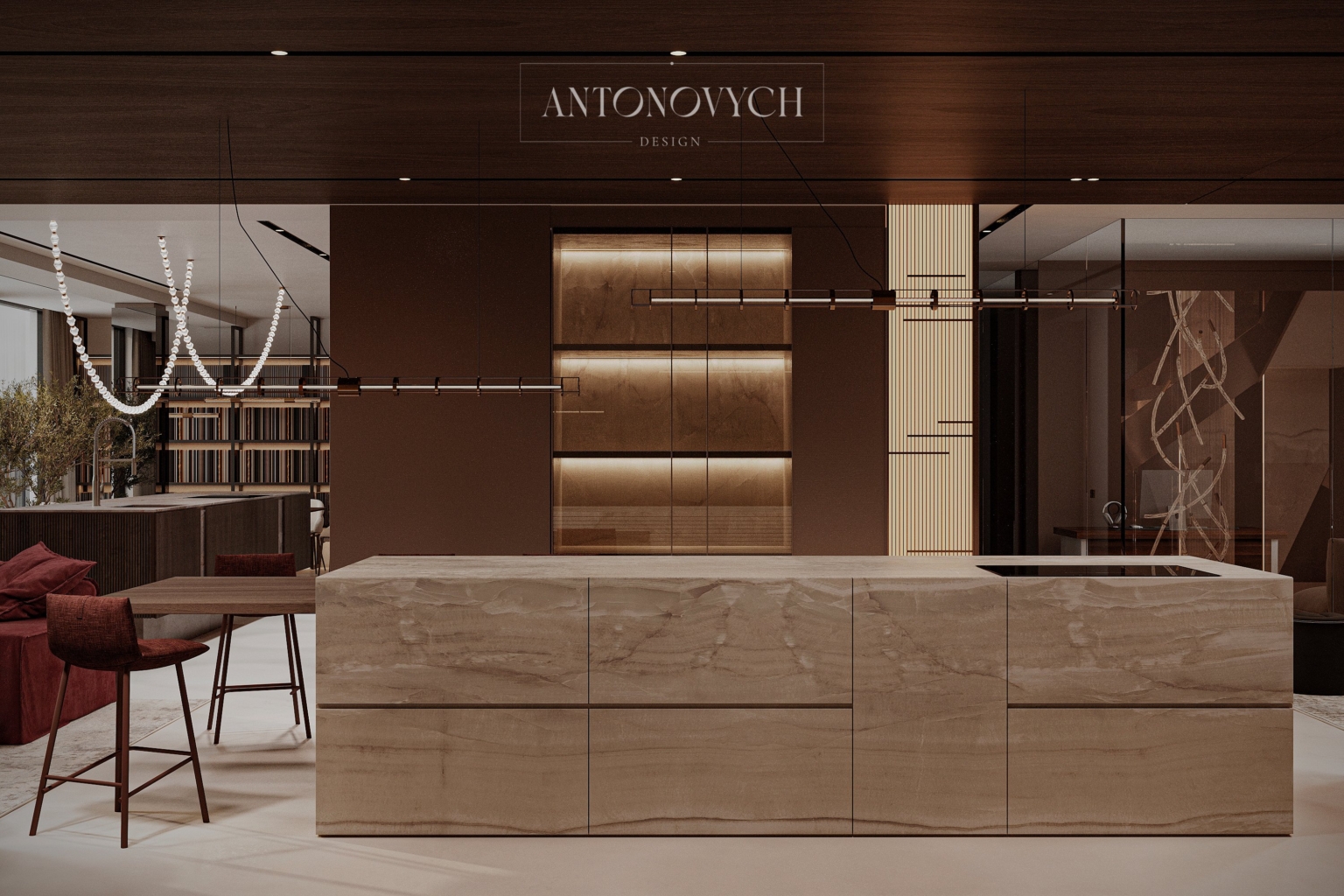
Aesthetics that cannot be conveyed online
The modern premium segment is increasingly shifting towards a ‘quiet’ aesthetic — where value is determined not by effect, but by the precision of proportions, the quality of materials, and the overall harmony of the environment.
This approach cannot be understood from a catalog or renders. It only manifests through physical contact with the space.
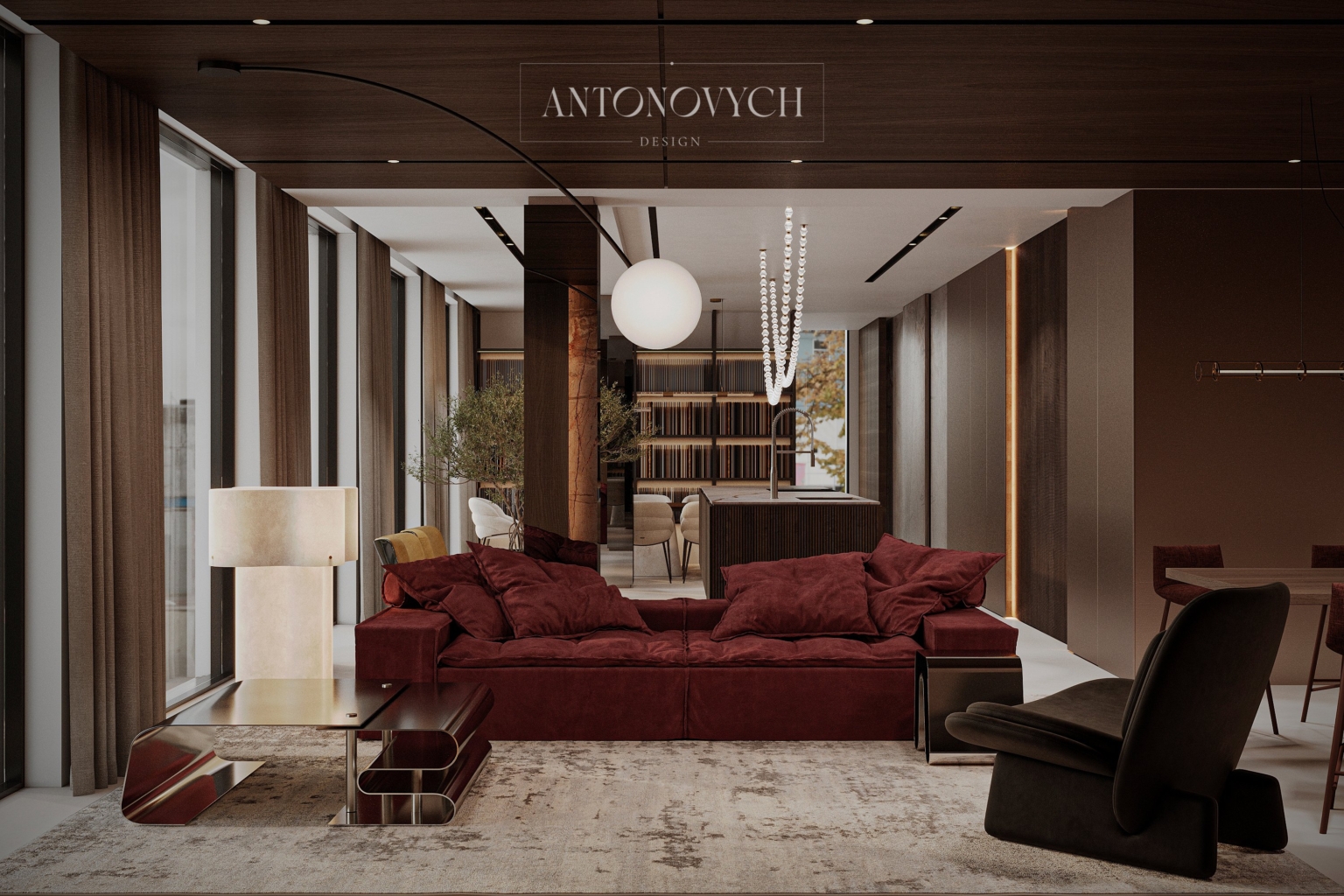
The Antonovych Design showroom embodies this idea: the interior here is not a decoration, but an environment that can be felt.
A response to the demands of a developing city
Astana is experiencing a period of rapid growth: new residential complexes, increased competition in the premium segment, and growing interest in architecture and product design.
Against this backdrop, the emergence of Antonovych Design is not just another address on the map. It is an infrastructure element that the market lacked: a platform capable of setting standards and shaping the culture of perceiving interior design as part of the quality of life.